Osight R Review: A Compelling New Rifle Red Dot Optic
Osight provided the Osight R for testing and review.
Some of the links in this post are affiliate links. That means if you buy something, I might earn a small commission — it doesn’t cost you anything extra, and it helps keep the content coming.
Introduction: Osight R Review
I already own more red dots than I probably need, so another one has to give me a reason to buy it. With the Osight R, the circle-dot reticle caught my attention first. The question was whether I would still like it after putting it on my PSA AK-V.
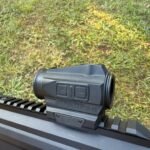
The Osight R has an enclosed emitter, a generous viewing window, and three reticle options. After 300 rounds, use around my property, and a 30-minute soak in a bucket, I like it. Whether I would pick it over the other optics I own takes a little more explaining.
Osight R Enclosed Red Dot
Enclosed emitter | Selectable circle-dot reticle | Motion activation
Check Price & Availability
Affiliate Disclosure: As an Amazon Associate, I earn from qualifying purchases. We may also earn commissions from purchases made through other retailer links, at no additional cost to you.
First Impressions and Construction
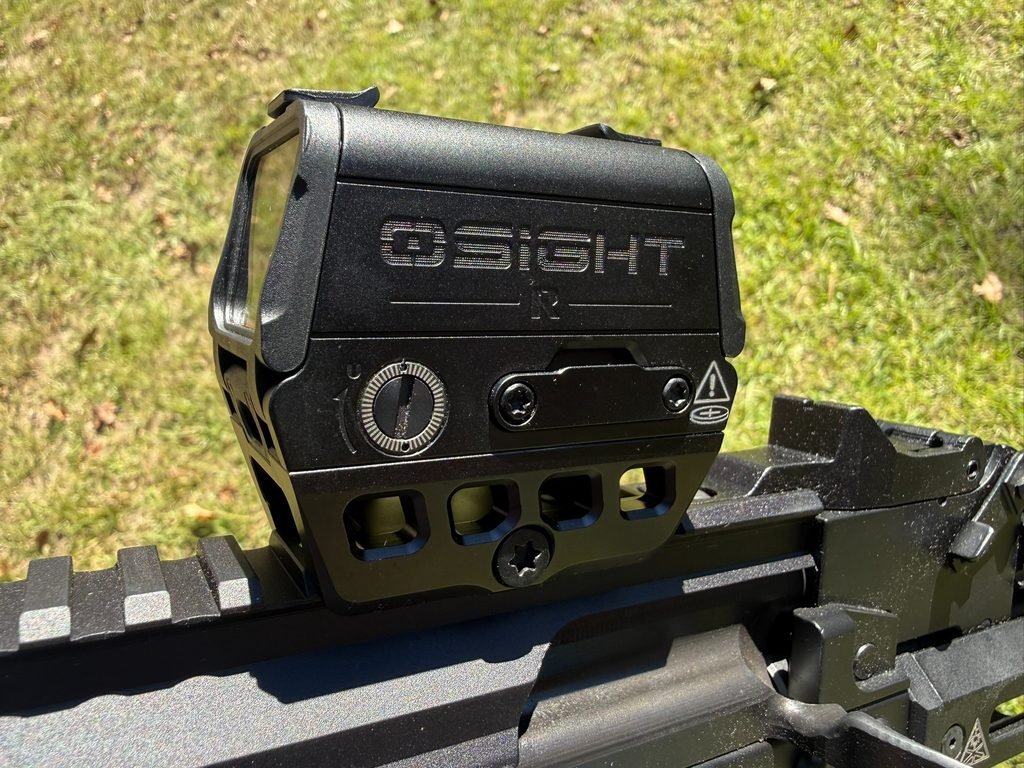
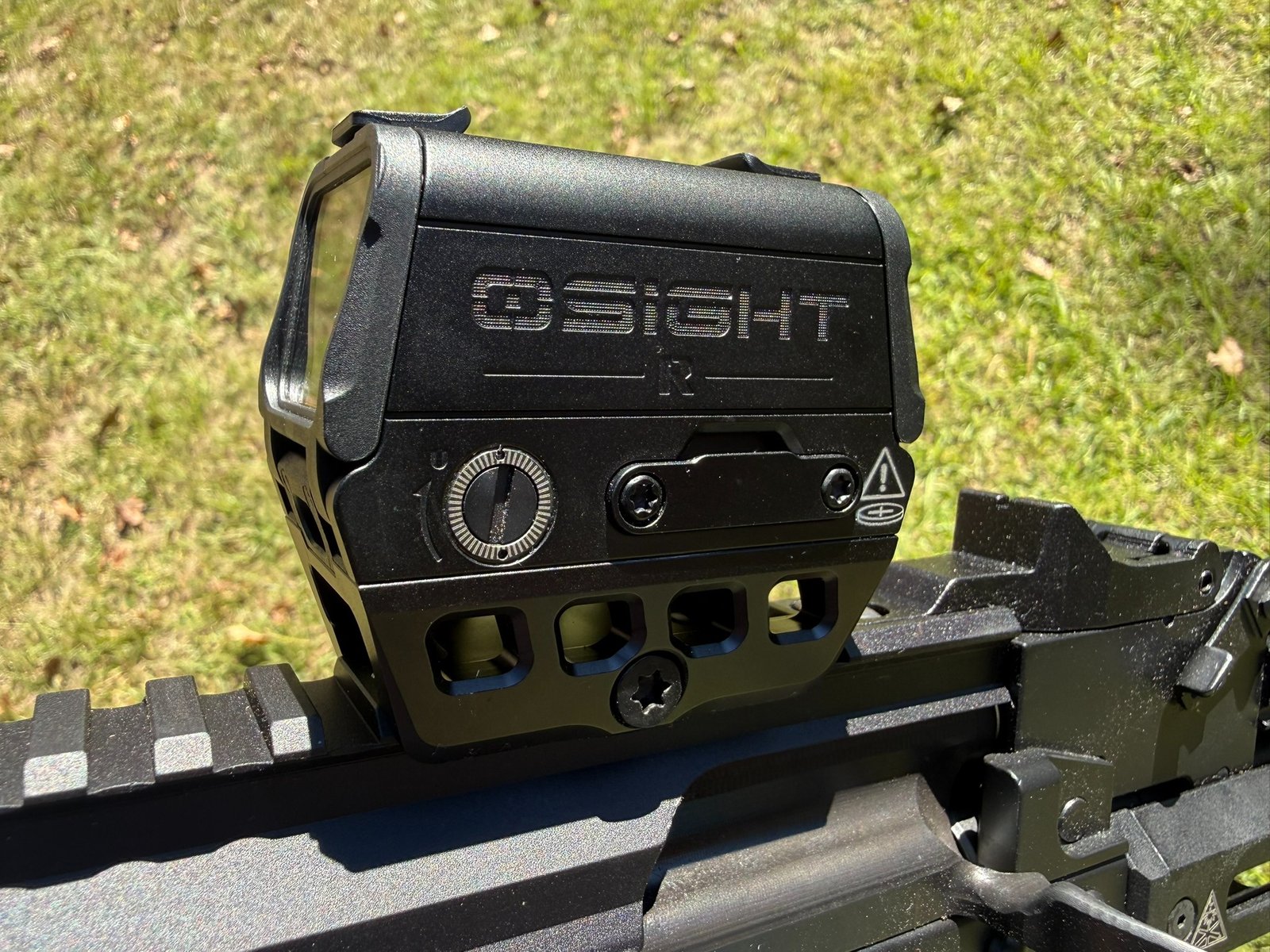
The packaging was well done, and I appreciated the included tool. The optic itself feels well-made, although it doesn’t have quite the same heft as some of my other rifle sights.
At a published 6.7 ounces with its standard mount and battery, the R is lighter than my Sig Romeo4S and considerably lighter than an EOTech 512 or Vortex UH-1. It feels lighter than some of my other optics, but I haven’t seen a problem with its construction during my testing. I wouldn’t judge its durability by how heavy it feels in my hand.
Features and Reticle
The reticle is what sells me on this optic. Users can select a 2 MOA dot, a 65 MOA circle, or the combined circle-dot. I strongly prefer the combination: the large circle is easy to find, while the center dot provides a precise aiming reference.
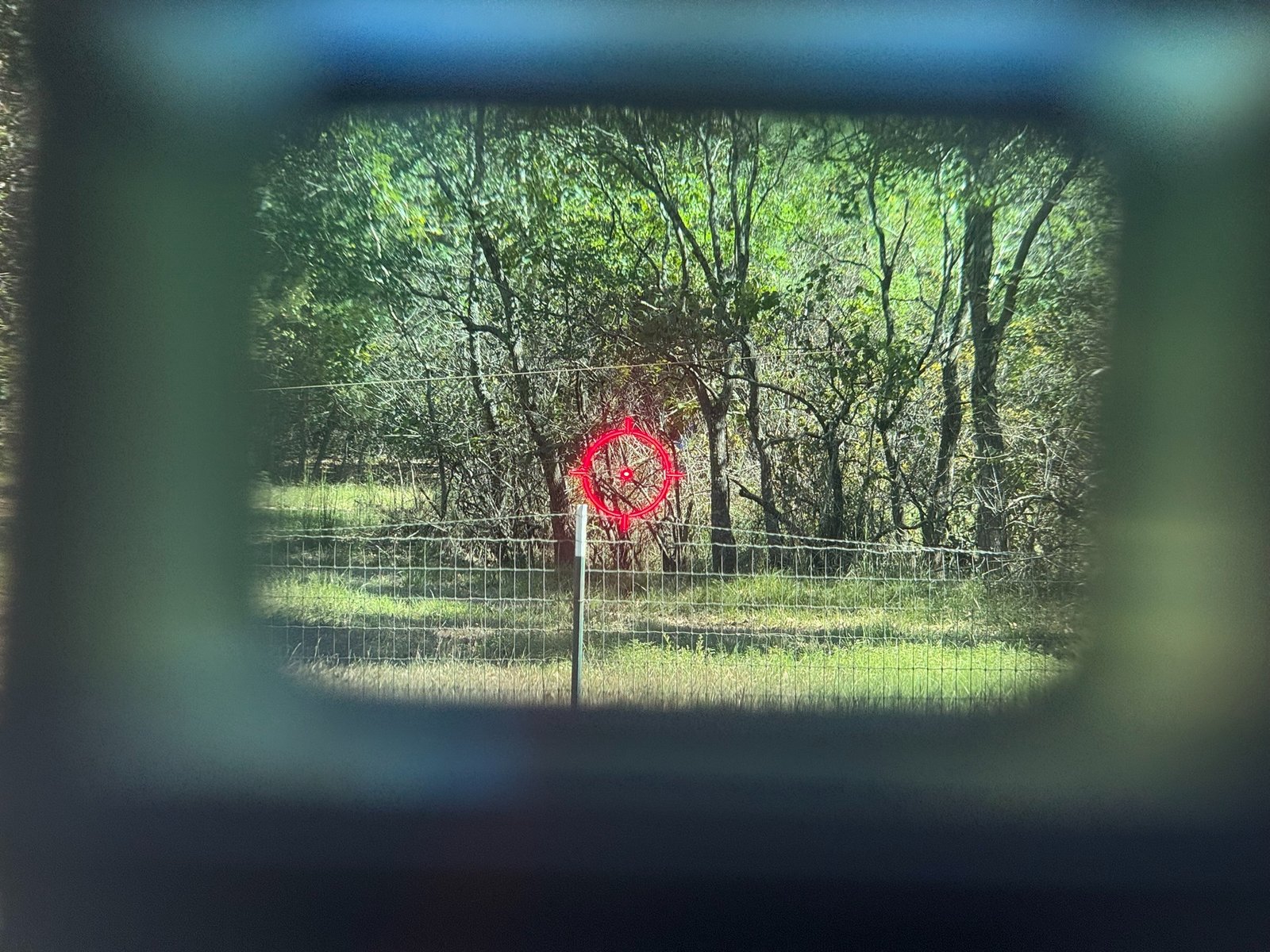
To my eyes, the reticle looks good even next to some of my more expensive optics. It was bright enough in direct sunlight, and I didn’t notice any distortion when viewing it without magnification. The adjustment buttons have a nice, positive click to them, which I appreciate.
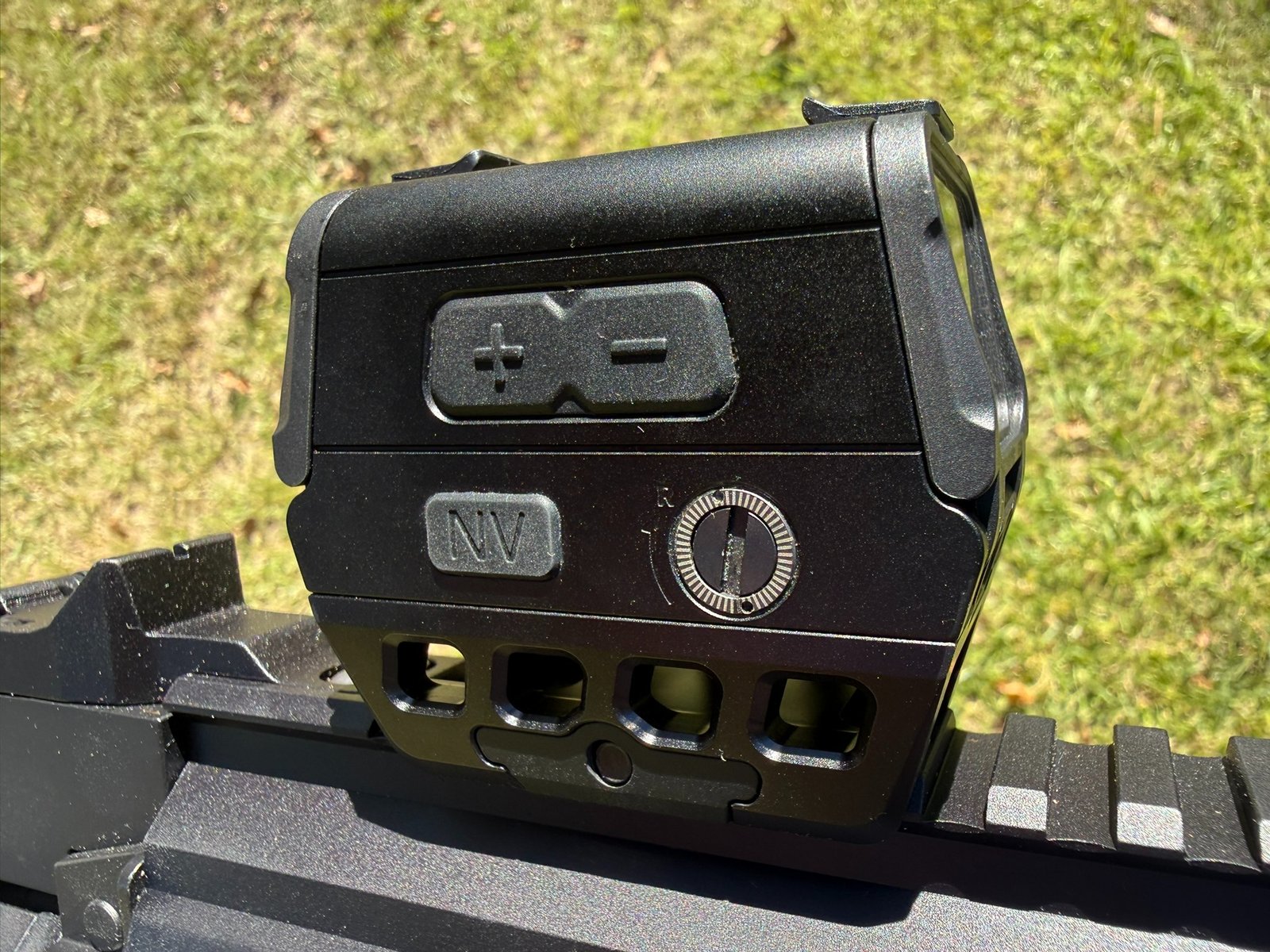
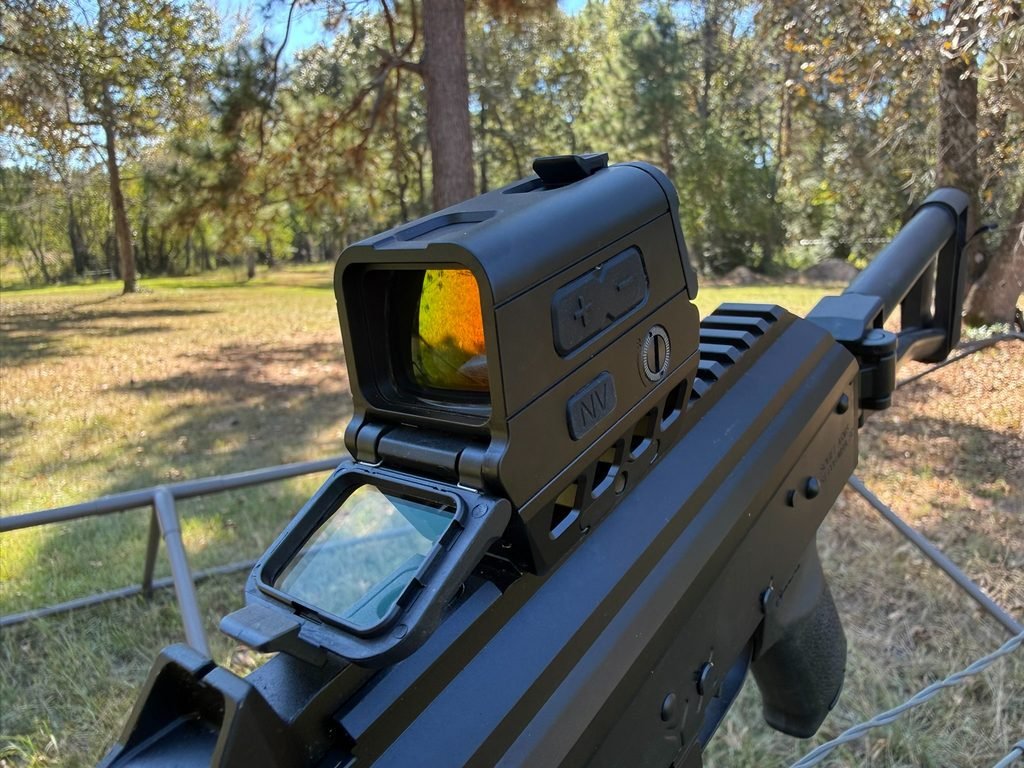
Beyond the reticle, the R has an enclosed emitter, removable lens covers, motion activation, and a side-loading CR2032 battery. Osight advertises up to 83,000 hours of runtime with the dot alone, but only 15,000 hours with the combined circle-dot at its specified test setting. Since that is my preferred configuration, the latter is the more relevant figure.
Range Performance and Water Testing
All range testing of the Osight R took place with it mounted on my Palmetto State Armory AK-V. I had no failures or operational problems during those 300 rounds. The reticle was easy to see, and the controls worked as they should.
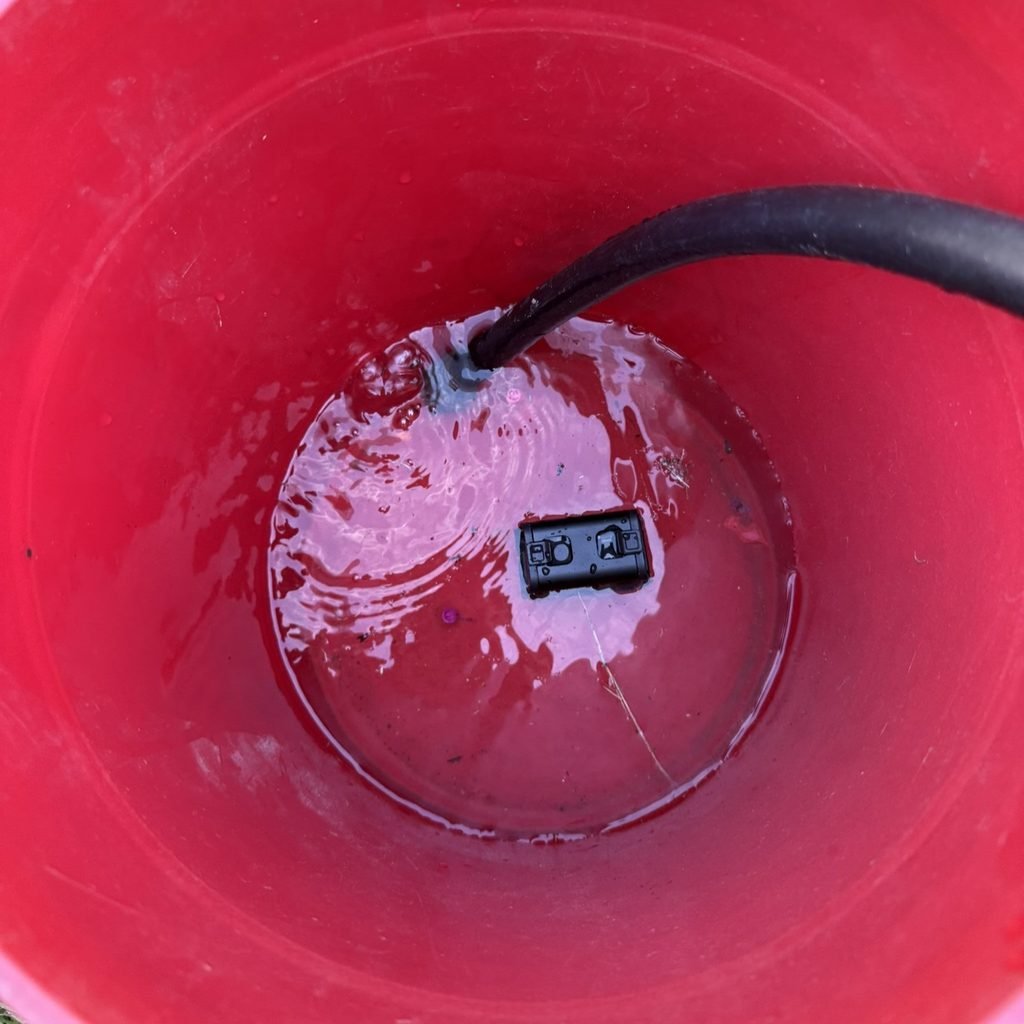
I also submerged the optic in a five-gallon bucket of water for 30 minutes. Admittedly, watching a new electronic sight sit at the bottom of a bucket was part of the fun. After 30 minutes, it came out working normally. That tells me it handled my bucket test, not what it would survive over years of use.
How Does It Compare?
My SIG Romeo4S is the first optic I would compare it with because I own one and both offer the circle-dot setup I like. Both offer selectable reticles and motion activation, while the SIG also provides solar assistance. The Romeo4S has a more substantial feel, but the Osight’s published weight is lower. If you like the circle-dot configuration but don’t want the additional weight of something like the Romeo4S, the Osight R makes a lot of sense. The Osight R is also typically more affordable than the Romeo4S, unless you manage to find a killer deal on the SIG.
Then there are simpler options like the SIG Romeo5 or the basic 2 MOA Holosun ARO. As much as I prefer the Osight’s circle-dot, there’s something to be said for the price and simplicity of a conventional red dot. The Romeo5 has a longer track record, while Holosun is an established name in rifle optics, even if the ARO itself is comparatively new. For someone who just needs a straightforward red dot on their rifle, I wouldn’t necessarily recommend spending more just to get the Osight’s reticle.
My Viridian MDS35 provides another useful contrast, with its larger window and green BRC reticle, but it occupies a more expensive category. I also liked how the Osight’s reticle looked next to those in my EOTech 512 and Vortex UH-1. I’m comparing the sight picture here, not saying the optics use the same technology.
On paper, the original Holosun AEMS is a close match. It shares the Osight’s advertised 1.10-by-0.87-inch window and 2 MOA/65 MOA reticle arrangement, while adding solar backup. I do not own an AEMS so can’t compare the two firsthand but check out this video from my buddy Ryan Domke on his channel TheGuyGearReview for more details.
Pros and Cons
Pros:
- Clear, daylight-bright circle-dot
- Enclosed design
- Positive controls
- No failures during my 300-round test
Cons
- Less established long-term record than some competitors
- More expensive than straightforward dot-only options
Osight R Enclosed Red Dot
Enclosed emitter | Selectable circle-dot reticle | Motion activation
Check Price & Availability
Affiliate Disclosure: As an Amazon Associate, I earn from qualifying purchases. We may also earn commissions from purchases made through other retailer links, at no additional cost to you.
Last Words
The circle-dot is the main reason I like the Osight R. It’s easy for me to pick up, the window gives me plenty of room, and I had no problems during my 300 rounds or the bucket test.
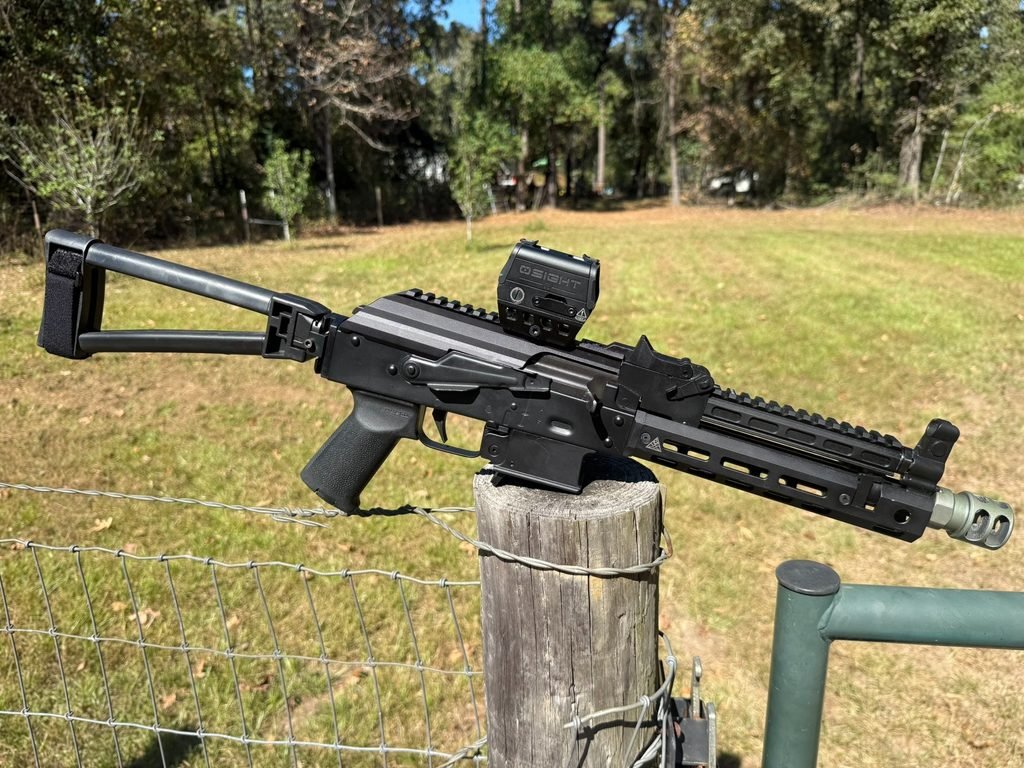
I’m pleased with those results, but they’re a good start, not a long-term reliability verdict. If an established track record is your first priority, I’d still look at the alternatives discussed above. But if you want a circle-dot without spending Romeo4S money, the Osight R is worth a look, especially on sale.
Frequently Asked Questions
Is the Osight R waterproof?
It carries a manufacturer IPX8 rating.
Does the Osight R have a circle-dot reticle?
Yes. It offers a 2 MOA dot, 65 MOA circle, or both together.
Would I recommend it for a defensive firearm?
My initial results were good, but I wouldn’t make that recommendation based only on 300 rounds and one water test.