Ruger 10/22 Takedown Review: A Rimfire Workhorse That Earned Its Keep
An in-depth Ruger 10/22 Takedown review based on years of real farm use. Reliability, suppressed performance, and whether it’s worth buying.
Some of the links in this post are affiliate links. That means if you buy something, I might earn a small commission — it doesn’t cost you anything extra, and it helps keep the content coming.
Introduction: Ruger 10/22 Takedown
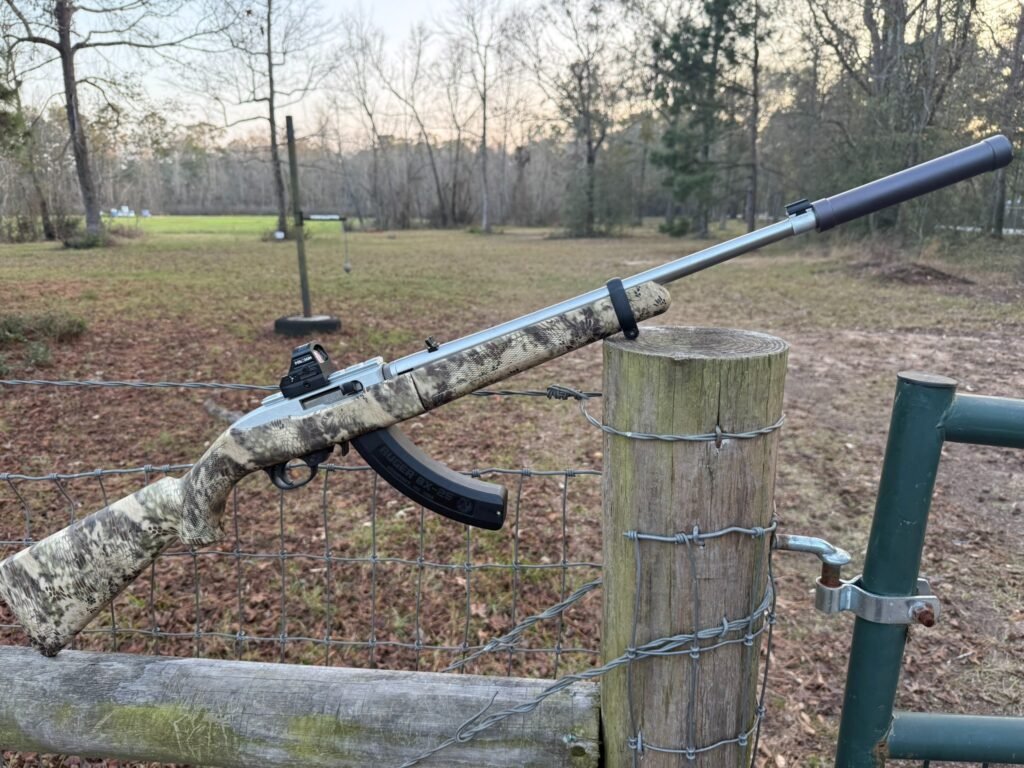
Some rifles live at the range or sit at the back of your safe as safe queens. Others quietly become hardworking tools. My Ruger 10/22 Takedown belongs in the second category. It has seen thousands of rounds, worked every lighting and weather condition imaginable in Southeast Texas, and has been in steady use around my hobby farm, dispatching predators that threaten my chickens.
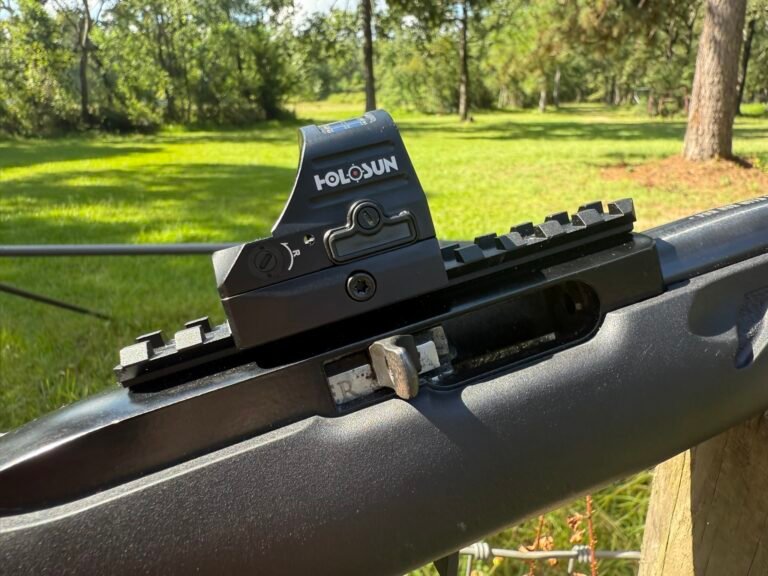
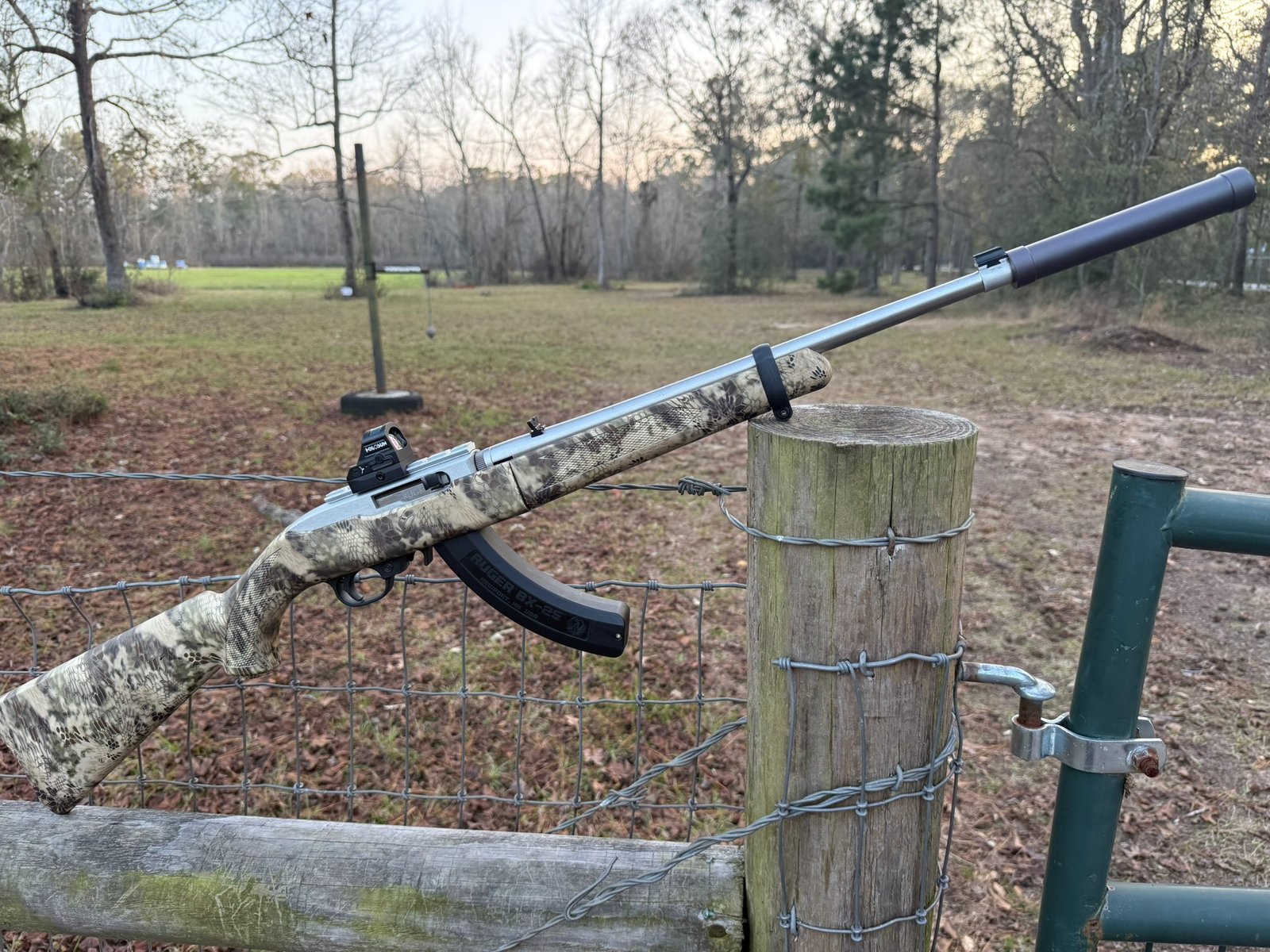
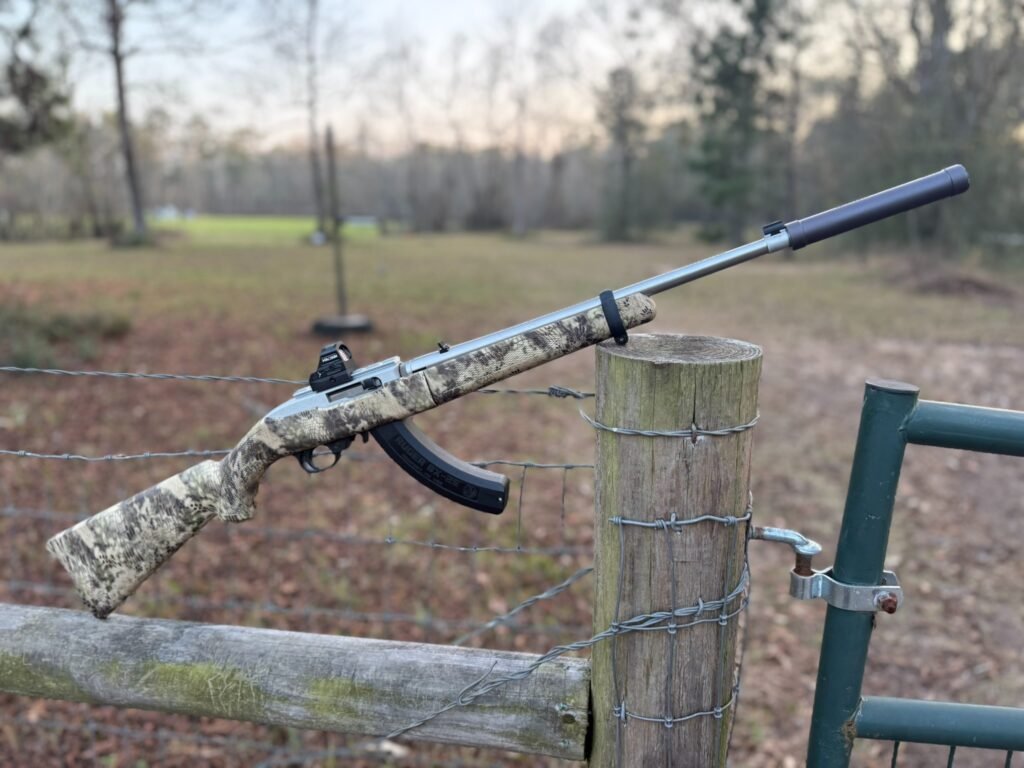
Set up with a Q El Camino suppressor and a Holosun 407C red dot, it has become one of the most practical rifles I own. This review is not about benchrest accuracy or spec-sheet comparisons. It’s about how the Ruger 10/22 Takedown performs when it is used regularly, carried often, and relied on to work.

First Impressions
The Takedown feels immediately familiar if you have any time behind a 10/22. Balance is good, weight is manageable, and nothing feels overcomplicated. The ability to separate the rifle into two compact halves sounds like a novelty until you live with it. Once you do, it makes complete sense, and while I do it less often now, I still appreciate the functionality when I need it.
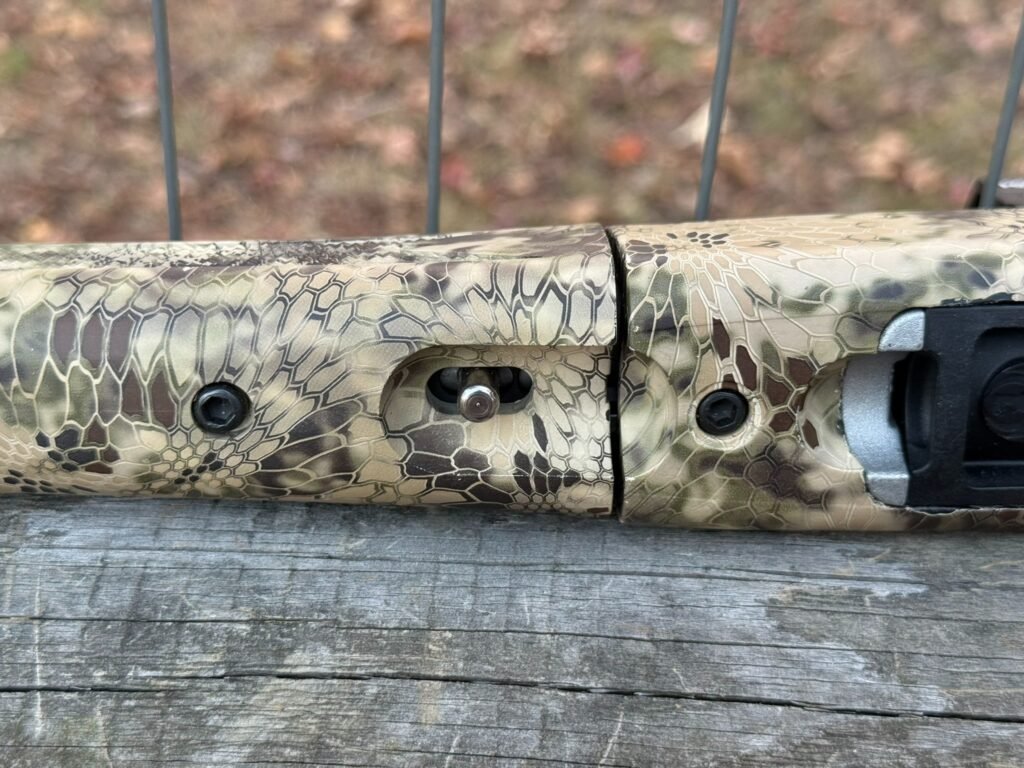
What stood out early was how quickly the takedown system faded into the background. The lockup is solid and repeatable, and once assembled, the rifle handles like a standard 10/22 rather than a compromise.
Features and Controls
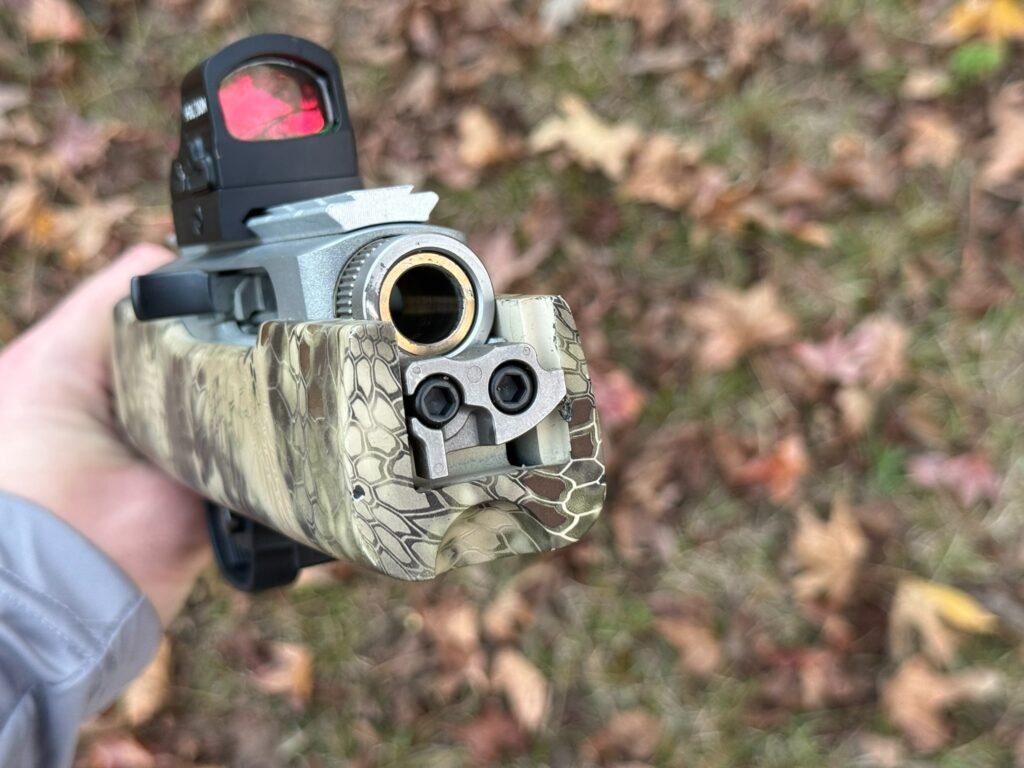
The rifle’s takedown feature sets it apart from other 10/22s right out of the box. The takedown mechanism is simple and effective. The barrel locks in consistently, and for the distances this rifle is intended for, it maintains a practical zero without fuss. Ruger’s rotary magazine design remains one of the platform’s strongest features, feeding reliably even in less-than-ideal conditions.
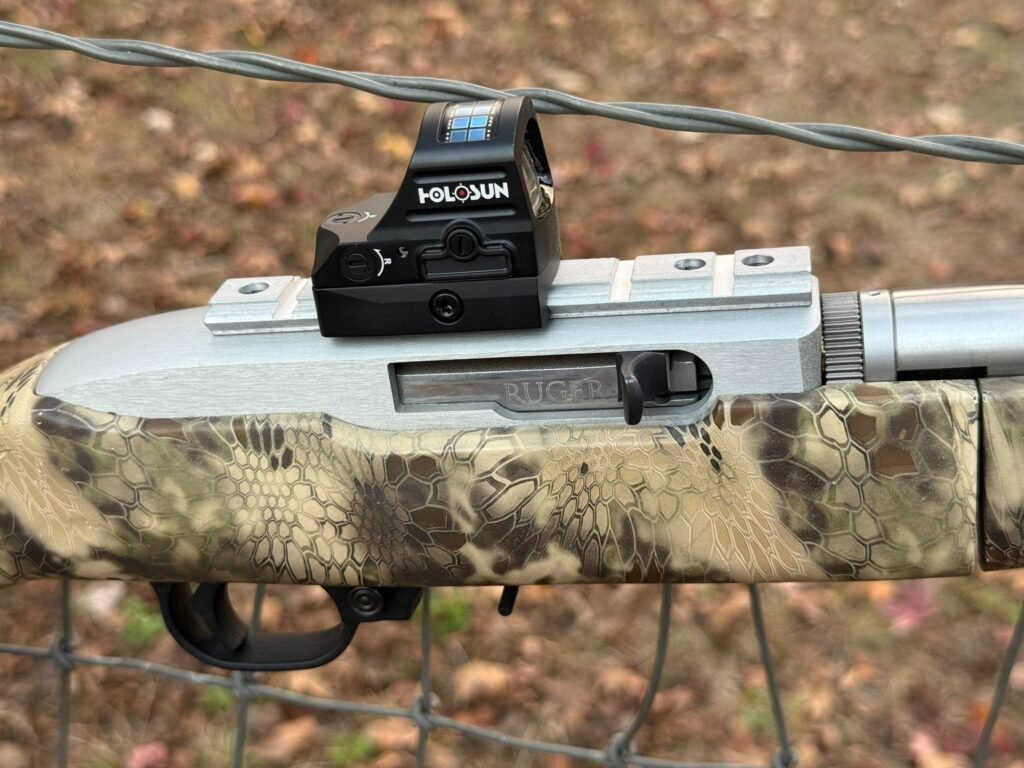
Controls are straightforward and intuitive. The crossbolt safety is easy to operate, the magazine release is accessible, and the bolt handle works well even with gloves. The factory trigger is basic but predictable, and it has smoothed out naturally over time.
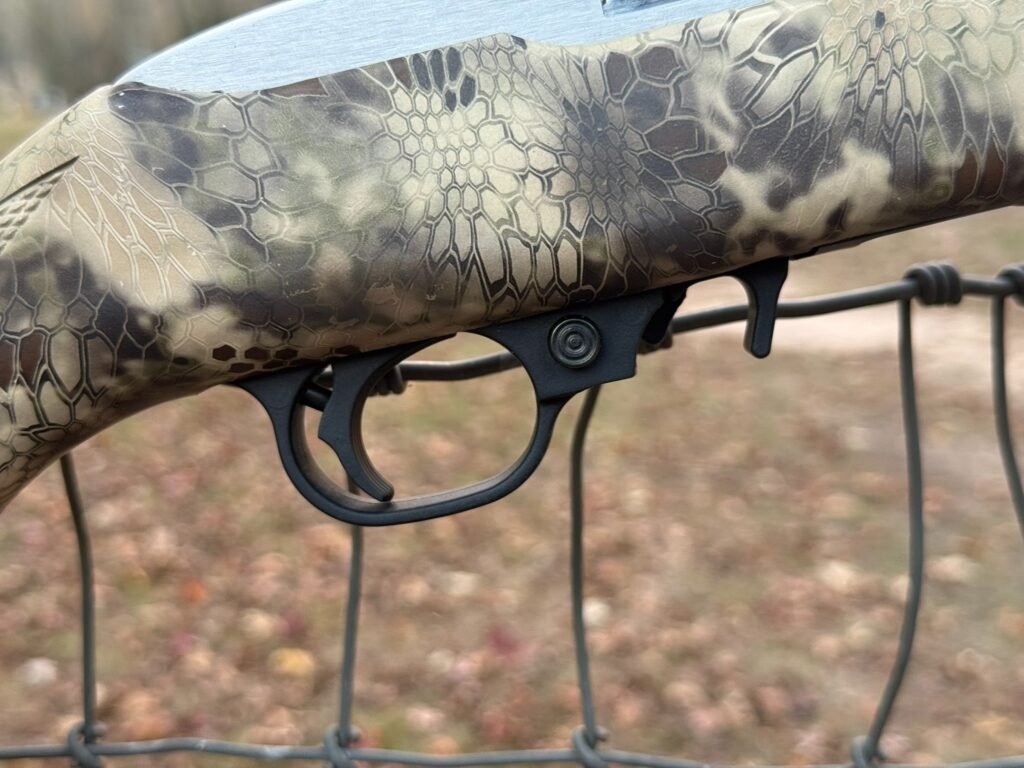
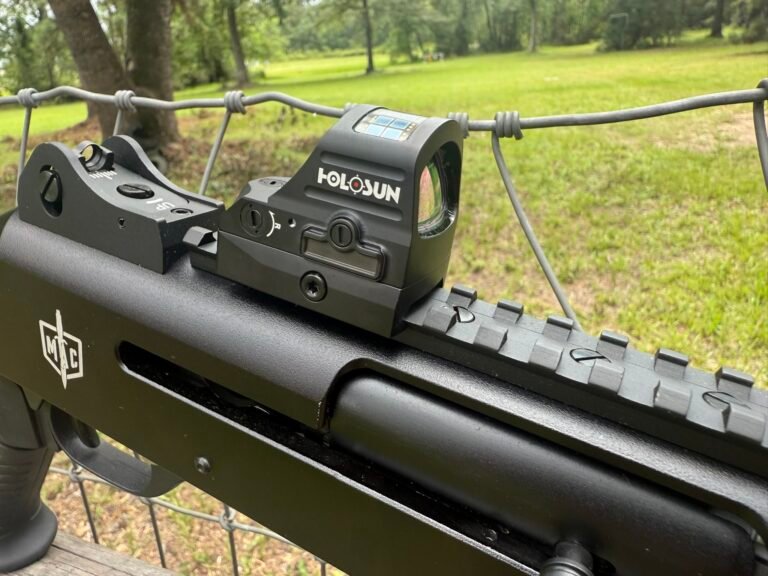
My setup is intentionally minimal. A Q El Camino suppressor and a Holosun 407C X2 are the only changes. Zeroed at roughly 25 yards, the red dot suits my real-world use perfectly. Most shots happen quickly and well inside that distance. I have dispatched many raccoons at basically point-blank range with the rifle. A suppressed 10/22 is one of the best firearms you can have on your farm.
Performance
Reliability is the defining trait of this rifle. It has run thousands of rounds of mixed ammunition, including CCI Standard Velocity, Winchester, Federal, and Remington. Suppressed or unsuppressed, it continues to cycle without drama. Any malfunctions over the years have been rare enough that none stand out in memory.
Suppressed performance is excellent with standard-velocity ammo. Noise is kept low enough that shots do not unnecessarily disturb livestock, which matters when using a rimfire as a working tool rather than a range toy. Recoil is negligible, and follow-up shots are effortless.
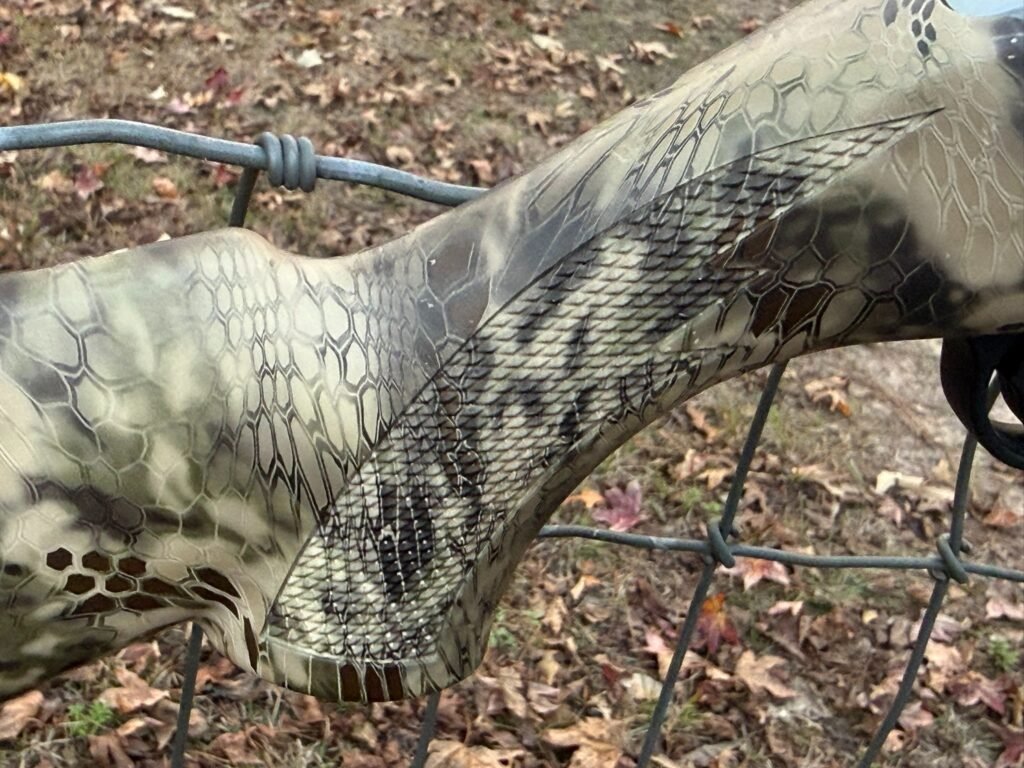
Accuracy has been entirely appropriate for its role. It is my job to dispatch the predators as humanely as possible, and the 10/22 is more than capable of allowing me to do so. I did not track formal group sizes because this rifle is not used from a bench. It consistently makes clean hits at typical farm distances in daylight, dusk, rain, shine, and under artificial light at night. It also tolerates dust, moisture, and general neglect better than many rifles, which has reinforced my confidence in it.
Pros and Cons: Ruger 10/22 Takedown
Pros:
- Extremely reliable
- Excellent suppressor host
- Easy to transport
- Simple controls
- Low maintenance
Cons:
- Basic factory trigger
Last Words
After years of steady use, the Ruger 10/22 Takedown has earned its place as a working rifle. It is light, dependable, quiet when suppressed, and capable of handling real tasks without complaint. It does not demand attention or constant tuning. It simply works.
If you want a rimfire rifle that can ride in a vehicle, break down for compact storage, and still perform like a standard 10/22 when assembled, this is an easy recommendation. For practical use rather than paper specs, the Takedown delivers exactly what it promises.
FAQ
Does the Ruger 10/22 Takedown hold zero after reassembly?
At typical rimfire distances, it has consistently held a practical zero for me.
Is the Ruger 10/22 Takedown a good suppressor host?
Yes. Subsonic ammunition, like CCI Standard Velocity, pairs very well with a rimfire suppressor.
What ammo works best in the Ruger 10/22 Takedown?
CCI Standard Velocity has been the most consistent in my suppressed setup.
Is the Takedown worth buying over a standard 10/22?
If compact transport or storage matters to you, yes. Otherwise, both perform similarly.